A Hatchery History
Lobster hatcheries emerged in the late nineteenth century in response to growing concerns about declining lobster populations. Scientists and fishery managers believed that raising lobster larvae in protected environments could improve survival during the species' most vulnerable early life stages and help replenish wild stocks.
Early hatcheries were established throughout New England and Atlantic Canada, releasing millions—and eventually billions—of larvae into coastal waters. However, limited rearing technology and the inability to distinguish hatchery-reared lobsters from wild lobsters made it difficult to measure their impact on fisheries.
Interest in hatcheries revived during the 1970s and 1980s as advances in lobster husbandry made it possible to rear lobsters through later developmental stages and even to market size. Researchers in North America and Europe explored hatchery-based stock enhancement, developing new tagging methods that allowed released lobsters to be tracked in the wild.
While some hatchery-reared lobsters survived to adulthood and entered commercial fisheries, studies generally found that the costs of large-scale hatchery programs outweighed the benefits.
Today, lobster hatcheries continue to play an important role in research, education, and conservation. They provide scientists with valuable tools for studying lobster biology, climate change, disease, genetics, nutrition, and early life history. More than a century of experience has shown that while hatcheries can contribute to our understanding of lobster populations, they are most effective when used alongside broader conservation measures, habitat protection, and sustainable fisheries management.
Timeline
1850s-1880s
Initial Experiments
Growing concern about declining lobster populations led scientists in North America and Europe to experiment with raising lobster larvae and juveniles in captivity, marking the beginning of lobster hatchery development.
1901
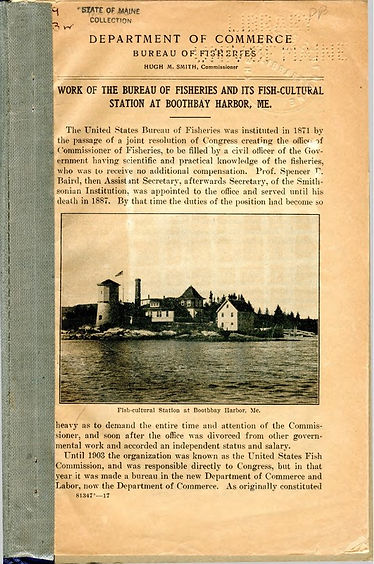
Boothbay Harbor, Maine Hatchery
Established by the U.S. Bureau of Fisheries, the Boothbay Harbor hatchery was the first large-scale lobster propagation facility in Maine and one of the earliest lobster hatcheries in North America. It reflected the growing belief that hatcheries could help replenish declining lobster stocks and support coastal fisheries.
1970-1989
Federal Funding Fuels Research
During the 1970s and 1980s, with new funds for lobster aquaculture and hatchery development, scientists successfully raised lobsters from hatch to harvest size, demonstrating the technical feasibility of lobster farming. However, the infrastructure and costs required remained too great for widespread adoption.
1986 -1992
Cutler Lobster Hatchery
University of Maine professor Brian Beal applied to the Lobster Fund for money to start a small hatchery in Cutler. The hatchery continued to receive funding from the Lobster Fund until 1992. “We couldn’t answer one question. How well are they surviving on the bottom [after release]? We just didn’t know,” Beal said.
1999
Independent Reviews of Hatcheries
Separate independent reviews of lobster hatcheries are sponsored by the US National Marine Fisheries Service (Nicosia and Lavalli) and the Maine State Legislature. The assessments came to the conclusion that hatcheries were unlikely to be economically viable as a stock enhancement tool, but are valuable for research and education.
2003
Stonington Lobster Hatchery
Penobscot Bay East Resource Center (now Maine Center for Coastal Fisheries) started the Zone C Lobster Hatchery as their first project. Fishermen and community members proved they could produce far more than 100,000 lobsters a year in the facility, however they were not able to determine how many survived or how strong they were at surviving in the wild.
Current
Homarus, Inc., Shediac, New Brunswick
Homarus, Inc. in Canada is the only hatchery running with the stated aim of enhancing the fishery. From 2002 to 2025 they have released 8.5 million larvae in New Brunswick and Nova Scotia. However, to date there has been no rigorous assessment of their impact.

Governor Lewis O. Barrows breaking ground for the new state lobster rearing station at Boothbay Harbor, 1938